

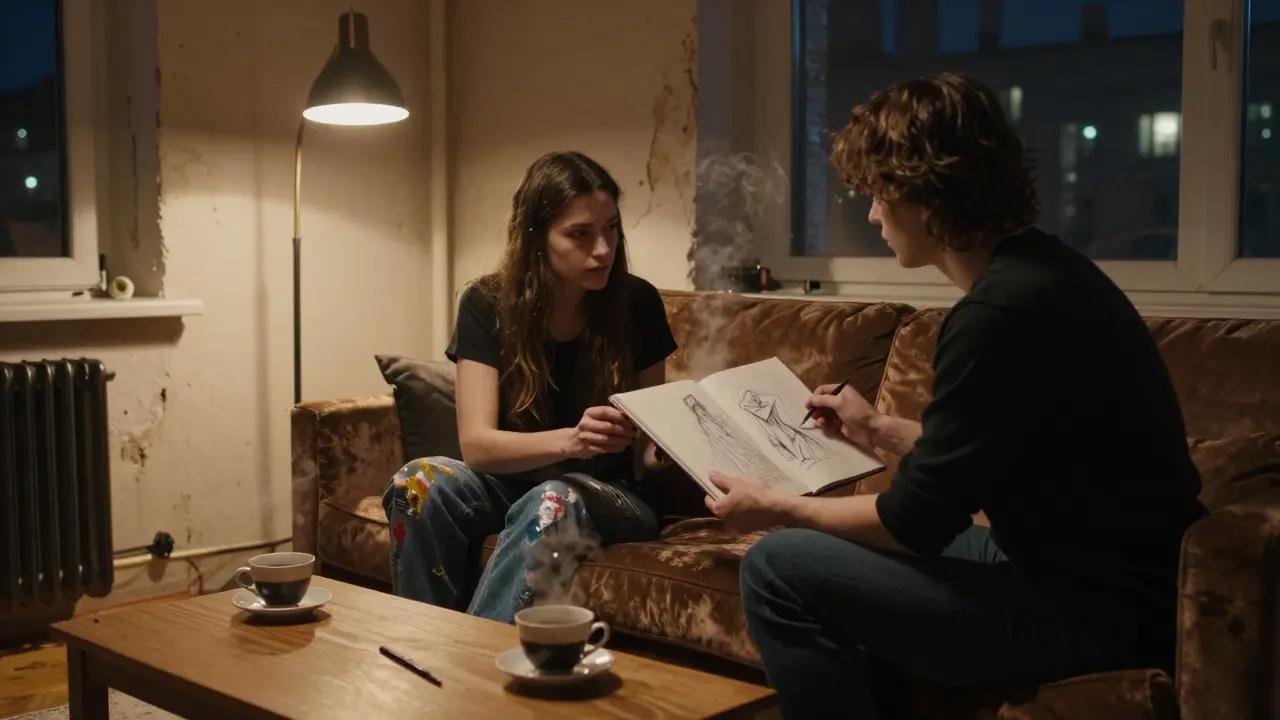

Walk through Berlin’s Kreuzberg or Neukölln on a Friday night, and you’ll see it-the quiet exchange between a painter in paint-splattered jeans and a client who just paid €150 for an hour of conversation, not touch. This isn’t a brothel. It’s not a nightclub. It’s the gray zone where art and escort work blur, and Berlin is one of the few cities where it’s not just tolerated-it’s celebrated.
The Artist Who Earns by Being Seen
Many people assume escort work in Berlin means sex. It doesn’t always. For a growing number of people, especially those trained in performance, poetry, or visual arts, escorting is a form of embodied art. It’s about presence. About listening. About creating a space where someone feels truly seen.
Take Lena, a former fine arts student who now works as a private companion. She doesn’t offer sexual services. Instead, she brings clients to abandoned factories turned galleries, reads them Rilke in German and English, and lets them sit with her in silence while the city hums outside. Her clients pay €200 an hour. Some come back monthly. One bought her a sketchbook and wrote, ‘You made me feel like I mattered again.’
This isn’t rare. Berlin’s escort scene has a documented subset of practitioners who identify as ‘artistic companions’-a term used in local forums and art journals since 2018. A 2023 survey by the Berlin Institute for Cultural Studies found that 18% of registered sex workers in the city listed visual or performance art as their primary creative discipline. Many use escort income to fund exhibitions, pay for studio rent, or support experimental theater projects.
Where the Gallery Meets the Apartment
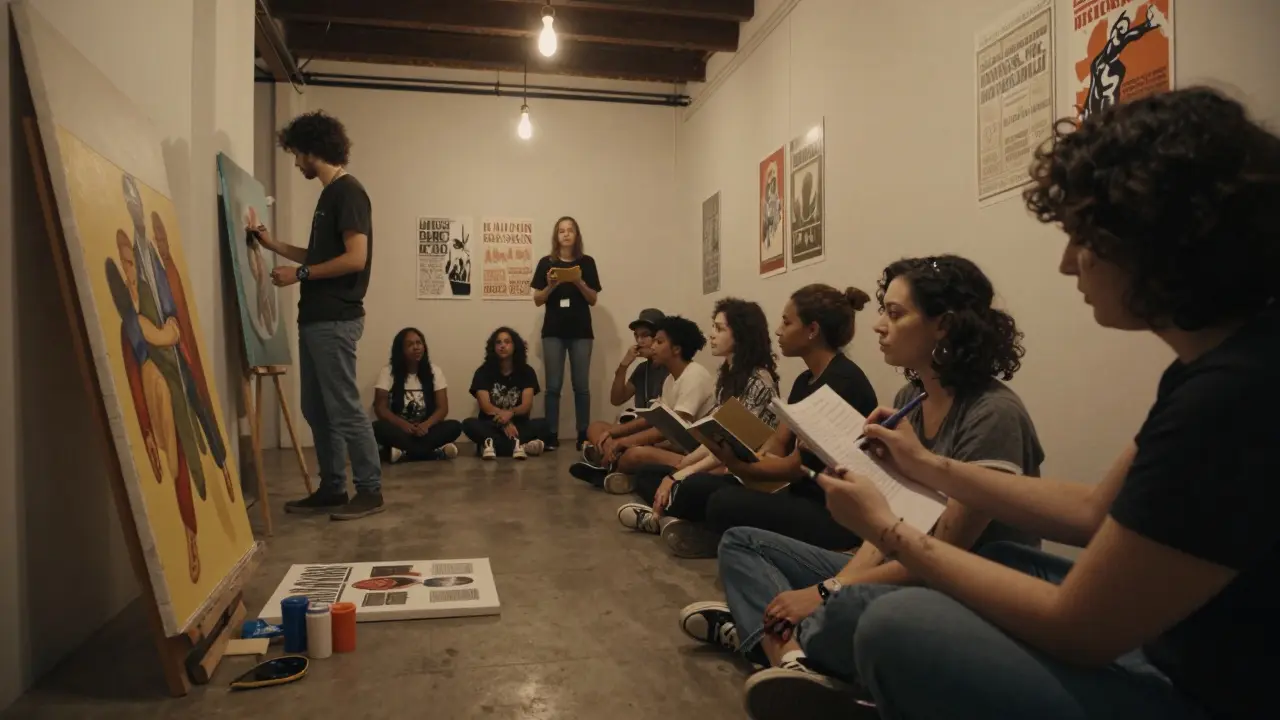
Some of Berlin’s most talked-about art events in the last five years have happened in private apartments, not galleries. These aren’t secret parties. They’re curated experiences hosted by escort-artists who invite a small group of clients and fellow creatives to engage with live painting, improvised soundscapes, or interactive installations.
In 2022, a series called ‘Rooms of Intimacy’ ran for six months across three districts. Each event was booked like an escort appointment-clients selected a time, a theme, and a host. One night, the host was a sculptor who asked guests to lie on a bed of ice while she carved their shadows into wax. Another night, a poet recited original work while clients wrote responses on their skin with temporary ink. No nudity. No sex. Just raw, unfiltered human connection framed as art.
These events were never advertised on Instagram. They spread through word-of-mouth, encrypted messaging apps, and underground art zines. The police never shut them down. Why? Because they didn’t break any laws. They just redefined what ‘service’ means.

The Legal Gray Area That Keeps It Alive
Prostitution is legal in Germany, but only if it’s registered, taxed, and conducted in licensed spaces-like brothels or designated zones. But when an artist hosts a client in their own home, and the exchange is framed as ‘companionship,’ ‘emotional support,’ or ‘creative collaboration,’ the law has no clear way to intervene.
This loophole isn’t accidental. It’s the result of decades of activism by sex workers’ unions and art collectives. In 2017, the Berlin Senate commissioned a study on ‘non-sexual intimate labor’ after complaints from residents about noise and disruption from brothels. The report concluded that many forms of paid companionship were ‘culturally significant’ and should not be conflated with commercial sex work.
Today, escort-artists operate under a kind of unofficial social contract: they don’t advertise sexual services, they don’t solicit on the street, and they keep their work private. In return, authorities turn a blind eye-as long as no one complains. The city’s tolerance policy is less about morality and more about pragmatism: Berlin thrives on its edge. And this edge? It’s painted, sculpted, and whispered into existence.
Why Berlin? Why Now?
Other cities have art scenes. Other cities have sex work. But Berlin is the only place where the two have fused into a sustainable, self-sustaining ecosystem.
Why? Three reasons:
- Low cost of living (for now): Studio space in Berlin is still cheaper than in Paris, London, or New York. Artists can survive on part-time escort work without needing to sell out to corporate gigs.
- Strong sex worker rights movement: Groups like ‘Prostitution is Work’ and ‘Artists for Autonomy’ have lobbied for legal recognition of non-sexual companionship as legitimate labor. They’ve won training grants, health access, and even public funding for art projects led by sex workers.
- A culture of radical openness: Berlin doesn’t ask ‘what are you doing?’ It asks ‘why are you doing it?’ If your art challenges norms, you’re not a problem-you’re a contributor.
It’s not perfect. Some artists struggle with stigma. Some clients exploit the system. But the movement keeps growing. More art schools now offer electives on ‘The Ethics of Paid Intimacy.’ Local galleries host exhibitions by escort-artists. Even the Berlinische Galerie included a piece in 2024 called ‘The Price of Presence’-a video installation featuring interviews with 12 companions, all artists, all unapologetic.
What This Means for the Future of Art
This intersection isn’t just a Berlin quirk. It’s a preview of how art might survive in a world where traditional funding is collapsing.
When museums stop paying for residencies and grants vanish, artists need new ways to survive. The escort-artists of Berlin are showing that art doesn’t have to be sold on walls to be valuable. It can be sold in hours-through attention, vulnerability, and shared silence.
Some critics call it commodification. But those who live it call it liberation. They’re not selling their bodies. They’re selling their humanity-and people are willing to pay for it.
Look at the rise of ‘empathy economy’ startups in Silicon Valley. Companies now pay therapists, coaches, and even strangers to listen to employees for 30 minutes. The demand for real human connection is rising. Berlin’s escort-artists didn’t wait for a market-they built it.
It’s Not About Sex. It’s About Recognition
At its core, this movement is about one thing: being seen without being judged.
A client might come because they’re lonely. Or grieving. Or burnt out from corporate life. They don’t want a hooker. They want someone who won’t pretend everything’s fine. Someone who knows what it’s like to make art in a world that doesn’t value it.
And the escort-artist? They know that feeling too.
They meet in dimly lit kitchens. They sip tea. They talk about failed exhibitions, unpaid rent, the weight of being misunderstood. Sometimes they cry. Sometimes they laugh until they can’t breathe.
And when the hour ends, the client leaves with more than a receipt. They leave with the quiet certainty that they mattered-even if just for an hour.
That’s not prostitution. That’s art.
Is escort work legal in Berlin?
Yes, prostitution is legal in Germany, and Berlin allows registered sex workers to operate. However, many escort-artists avoid legal definitions by framing their work as companionship, emotional support, or artistic collaboration-activities that fall outside the scope of regulated sex work. As long as no explicit sexual services are advertised or demanded, these interactions remain legally unchallenged.
Do escort-artists in Berlin have access to healthcare and social benefits?
Yes. Since 2020, Berlin has offered health insurance and counseling services to registered sex workers through city-funded programs. Many escort-artists also qualify for artist grants and social welfare programs if they can prove creative income. Organizations like ‘Kunst und Körper’ help them navigate paperwork and access mental health support tailored to their work.
Can anyone become an escort-artist in Berlin?
There’s no formal certification, but success requires more than just offering time. Most established escort-artists have a strong creative portfolio-visual art, writing, performance, or music. They also understand boundaries, consent, and emotional labor. Many start by connecting with local art collectives or attending workshops run by sex worker advocacy groups to learn safety practices and ethical frameworks.
Are these services only for men?
No. While early reports focused on male clients, recent data shows that over 40% of clients are women and non-binary individuals. Many escort-artists specialize in serving LGBTQ+ clients, trauma survivors, or people who feel alienated by traditional therapy or dating culture. The work is increasingly diverse in both provider and client demographics.
How do clients find escort-artists in Berlin?
Most connections happen through private networks: encrypted apps like Signal, invitation-only forums, art gallery newsletters, or word-of-mouth referrals. Some use discreet platforms like ‘CompanionBerlin’ or ‘ArtfulHours’-websites that list profiles without mentioning sex, focusing instead on interests like ‘poetry nights,’ ‘gallery tours,’ or ‘silent dinners.’ Advertising on public sites like Instagram or dating apps is rare and often avoided to maintain privacy.





Write a comment